
Originally published: 24 March 2026
Last reviewed for compliance: 24 March 2026
Working at Height PPE: What Equipment Is Required for Safety?
Working at height is one of the highest-risk activities across construction, maintenance, utilities and industrial environments. Falls from height remain one of the leading causes of workplace injury in the UK, making proper planning, training and personal protective equipment (PPE) essential.
Where risks cannot be eliminated through other control measures, employers must provide suitable working at height PPE to help protect workers.
This guide explains the main types of equipment used for working at height, how they are used and how businesses can manage height safety across teams.
👉 Browse working at height equipment: Working at Height
👉 Explore full PPE range: PPE
What is considered working at height?
In the UK, working at height refers to any situation where a person could fall and injure themselves. This includes more than obvious tasks such as roofing or scaffolding work. It can also include ladders, platforms, elevated access points and work near open edges.
Common examples include:
- Roofing and construction work
- Working on ladders or scaffolding
- Maintenance at elevated levels
- Accessing high storage or plant areas
- Inspection or installation work above ground level
Employers must assess these risks and put suitable safety measures in place.
For a broader legal overview, see what PPE is required by law in the UK workplace.
Why PPE is important for working at height
Planning, supervision and safe systems of work should always come first, but PPE provides a critical additional layer of protection where fall risks remain.
Working at height PPE is used to:
- Help prevent falls where possible
- Arrest falls safely if they occur
- Reduce the severity of injury in the event of a fall
Providing the correct equipment helps protect workers and support safer site practices.
Key types of working at height PPE
Height safety equipment is typically used as part of a complete fall-protection system rather than as a single standalone product.
Safety harnesses
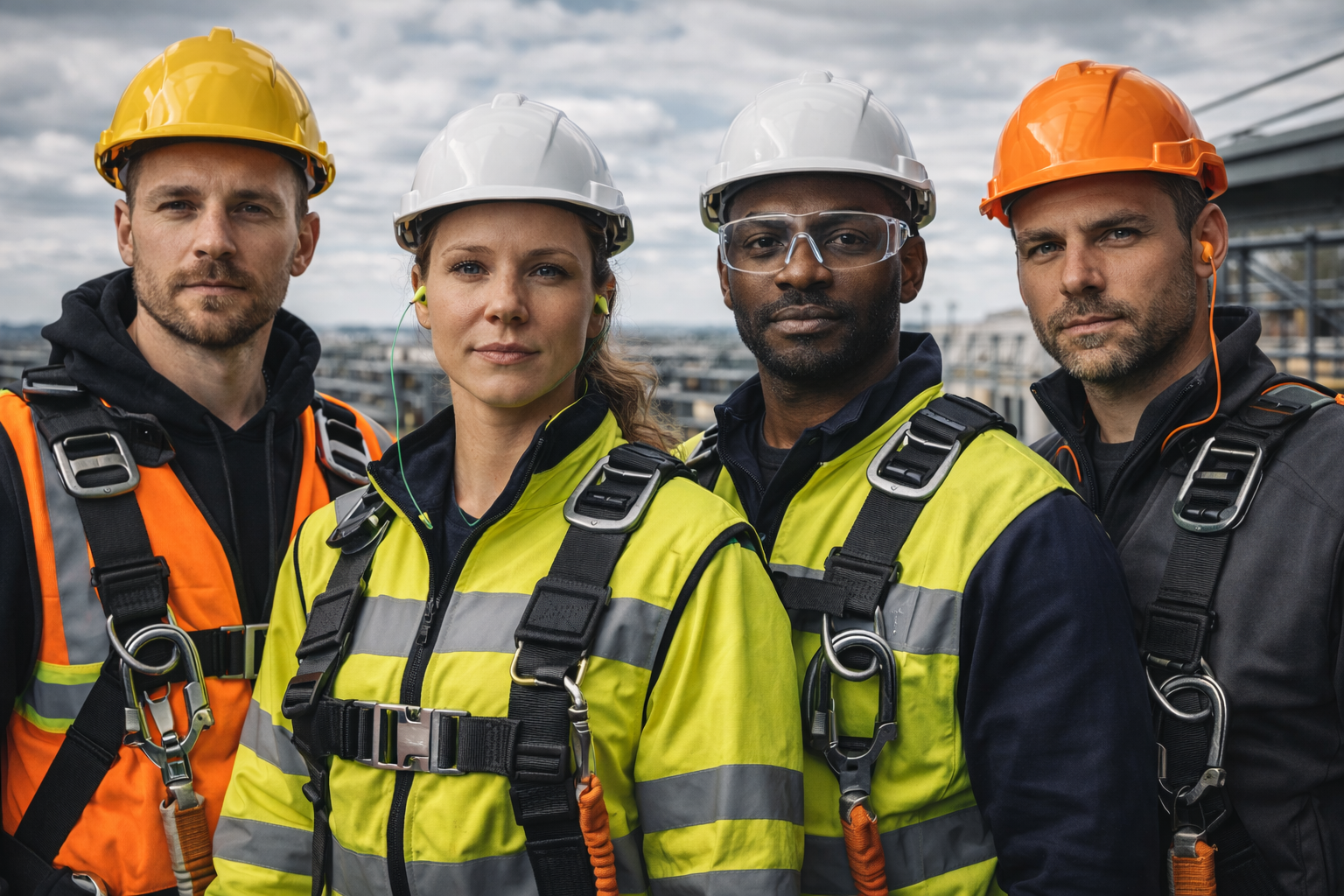
Safety harnesses are worn by workers to distribute fall forces across the body and reduce the risk of serious injury.
👉 Browse safety harnesses: Safety Harnesses
Lanyards
Lanyards connect the harness to an anchor point and may include shock-absorbing features to help reduce impact forces during a fall.
👉 Browse lanyards: Lanyards
Fall arrest systems
Fall arrest systems are designed to stop a fall once it occurs and help reduce injury risk through controlled load distribution and system design.
Anchor points
Anchor points provide the secure attachment for harness and lanyard systems. They must be suitable for the intended use and capable of supporting fall forces safely.
All components should be compatible and used as part of the correct system.
Working at height PPE as part of a full safety system
Height safety equipment is normally used alongside other PPE to provide broader protection.
Workers operating at height may also require safety helmets and work gloves to reduce other site risks.
Depending on the environment and task, they may also need eye protection and hearing protection.
For broader site guidance, see our construction PPE guide.
Choosing the right working at height equipment
Selecting the correct working at height PPE depends on the work environment, access method and the level of fall risk involved.
Businesses should consider:
- Height and access method
- Duration of work
- Worker movement requirements
- Anchor point availability
- Compatibility with other PPE
Choosing suitable equipment helps ensure both safety and practical usability on site.
👉 Related range: Construction Workwear
Inspection and maintenance of working at height PPE
Regular inspection is essential to make sure equipment remains safe to use.
Checks should include:
- Signs of wear, cuts or damage
- Fraying or deterioration in straps and webbing
- Condition of connectors, hooks and adjustment points
- Any distortion, damage or contamination affecting performance
Any damaged or questionable equipment should be removed from use immediately.
Training and correct use
Providing PPE alone is not enough. Workers must know how to use equipment correctly and safely.
This includes:
- How to wear and adjust harnesses properly
- How to connect lanyards safely
- Understanding anchor points and attachment methods
- Recognising damaged or unsuitable equipment
- Following safe systems of work for height tasks
Proper training helps reduce the risk of misuse and improves the effectiveness of the equipment provided.
Managing working at height PPE across teams
For businesses operating across multiple workers or sites, consistent PPE management is essential.
Best practices include:
- Providing the correct equipment for each role and task
- Maintaining consistent standards across sites
- Keeping spare equipment available where needed
- Replacing worn or damaged items promptly
- Reviewing equipment issue as work scopes change
Some businesses include height safety equipment within wider PPE kits to make supply and management easier.
Choosing working at height PPE for your team
Working at height requires careful planning, the right equipment and consistent safety processes.
By choosing suitable PPE and maintaining it correctly, businesses can help reduce the risk of falls and support safer working conditions across teams.
👉 Browse working at height equipment: Working at Height | Safety Harnesses | Lanyards
Related PPE guides
- What PPE Is Required by Law in the UK Workplace?
- Construction PPE Guide
- Safety Helmets Guide
- Work Gloves Guide
- Respirators Guide
FAQ: Working at height PPE
What PPE is used for working at height?
Working at height PPE commonly includes safety harnesses, lanyards and other fall-protection equipment, often used alongside helmets and other site PPE.
What counts as working at height in the UK?
It includes any work where a person could fall and injure themselves, including roofs, ladders, scaffolds, platforms and work near open edges.
Do workers need training to use height safety equipment?
Yes. Workers should be trained to wear, adjust, inspect and use working at height equipment correctly.
When should harnesses and lanyards be replaced?
They should be removed from use and replaced if they show wear, cuts, fraying, damaged fittings or any other signs that safety may be compromised.
Improving safety when working at height
Working at height remains one of the most serious workplace risks. By combining the right equipment, training and management processes, businesses can create safer environments for their teams.
👉 Explore all PPE categories: PPE