
Originally published: 9 March 2026
Last reviewed for compliance: 9 March 2026
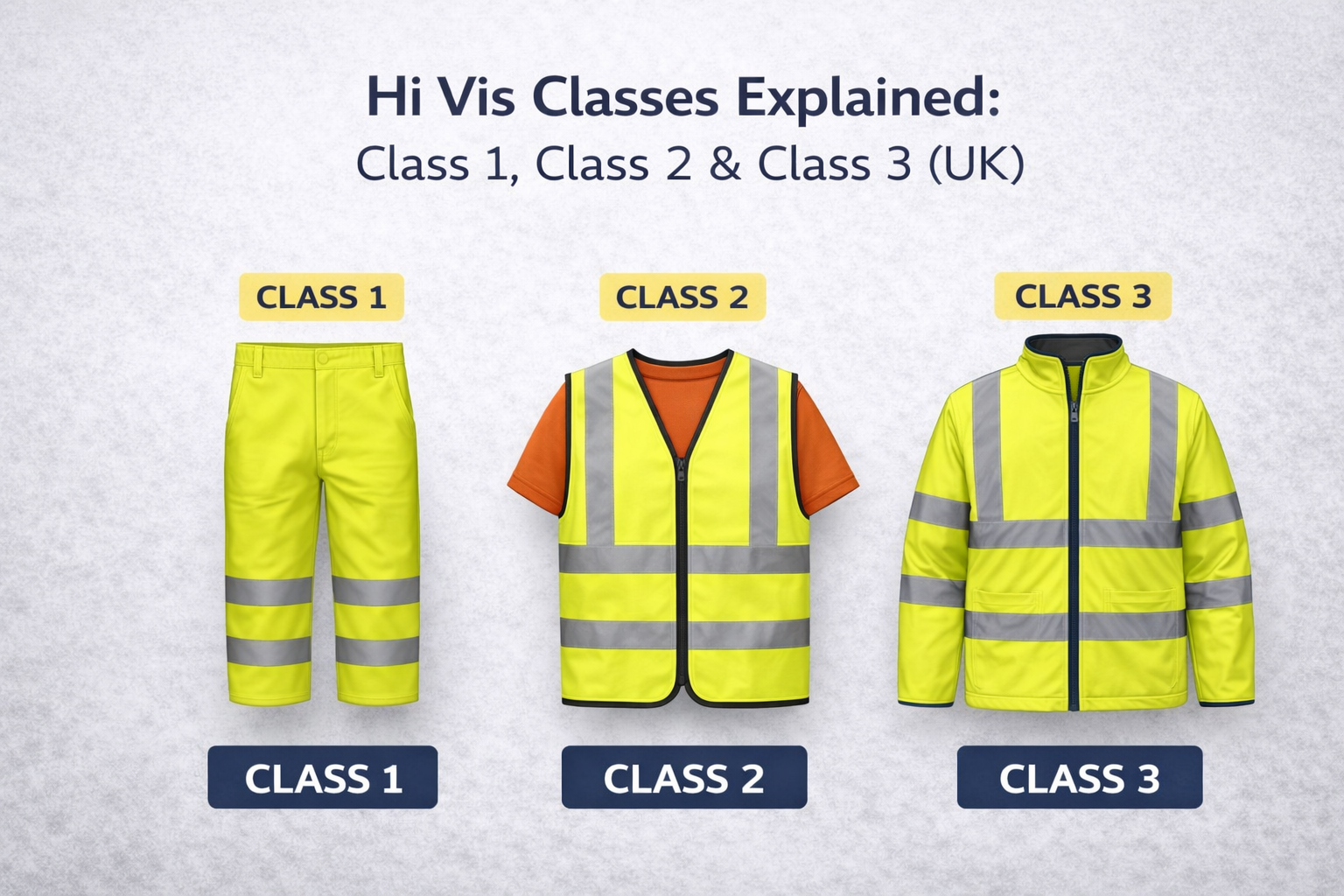
Hi-Vis Classes Explained: Class 1, Class 2 & Class 3 (UK)
Hi-vis classes under EN ISO 20471 help employers choose the correct level of visibility for their working environment. The class is based on the amount of fluorescent material and reflective tape built into the garment. In simple terms, the higher the class, the greater the visibility.
This guide explains:
- What hi-vis classes mean
- The difference between Class 1, Class 2 and Class 3
- Which environments require each class
- How to choose the correct class from a risk assessment
- Common mistakes that affect compliance
👉 Shop hi-vis clothing by type including hi vis vests, hi vis jackets, hi vis trousers and hi vis coveralls, or browse the full hi vis workwear range.
What are hi-vis classes?
EN ISO 20471 defines three classes of hi-vis clothing: Class 1, Class 2 and Class 3. These are based on the amount of visible fluorescent material and reflective tape in the garment.
The class is not just about colour or brightness — it determines whether the garment provides sufficient visibility for the level of risk.
👉 Full standard explained: EN ISO 20471 Explained
Quick guide: which hi-vis class do you need?
Most UK workplaces follow these general guidelines:
- Class 1 – low-risk environments such as controlled sites or visitor use
- Class 2 – medium-risk environments including logistics, warehouses and general construction
- Class 3 – high-risk environments such as roadworks, night work and high-speed traffic areas
The correct class should always be based on a formal risk assessment.
Class 1 hi-vis explained
Class 1 provides the lowest level of visibility and is typically used in controlled environments.
Typical use:
- Visitors on site
- Private yards
- Low-risk areas with slow-moving vehicles
Common garments:
Class 2 hi-vis explained
Class 2 is the most commonly used level for everyday work environments.
Typical environments:
- Warehouses and logistics
- Construction sites
- Utilities and maintenance work
Common garments:
Class 3 hi-vis explained
Class 3 provides the highest level of visibility and is required in higher-risk environments.
Typical environments:
- Roadworks and highways
- Night work
- High-speed traffic zones
Common garments:
Choosing the right hi-vis class
The correct class depends on:
- Vehicle speed
- Lighting conditions
- Weather conditions
- Distance visibility requirements
- Site rules and contracts
👉 Related: When Is Hi-Vis Required?
Does colour affect hi-vis class?
No. Both orange and yellow garments can meet EN ISO 20471 requirements. The class is determined by material coverage, not colour.
👉 Read: Orange vs Yellow Hi-Vis
Common mistakes with hi-vis classes
- Using non-certified clothing
- Choosing the wrong class for the risk
- Failing to replace worn garments
- Incorrect logo placement affecting compliance
👉 Related:
Specialist environments
Some environments require additional standards beyond class selection:
👉 Related:
Shop hi-vis clothing by category
FAQ: Hi-vis classes
What is the difference between Class 1, 2 and 3?
The difference is the amount of visible material. Higher classes provide greater visibility.
Is Class 3 always required?
No. The correct class depends on the risk assessment and working environment.
Are hi-vis vests always Class 1?
Not always. The class depends on the garment design and certification.
Can logos affect compliance?
Yes. Incorrect placement can reduce visibility and affect compliance.
Final thoughts
Choosing the correct hi-vis class is essential for both safety and compliance. By understanding the differences between Class 1, Class 2 and Class 3, employers can select appropriate garments for their environment and ensure workers remain visible in all conditions.
👉 Browse the full hi vis workwear range