
Originally published: 9 March 2026
Last reviewed for compliance: 9 March 2026
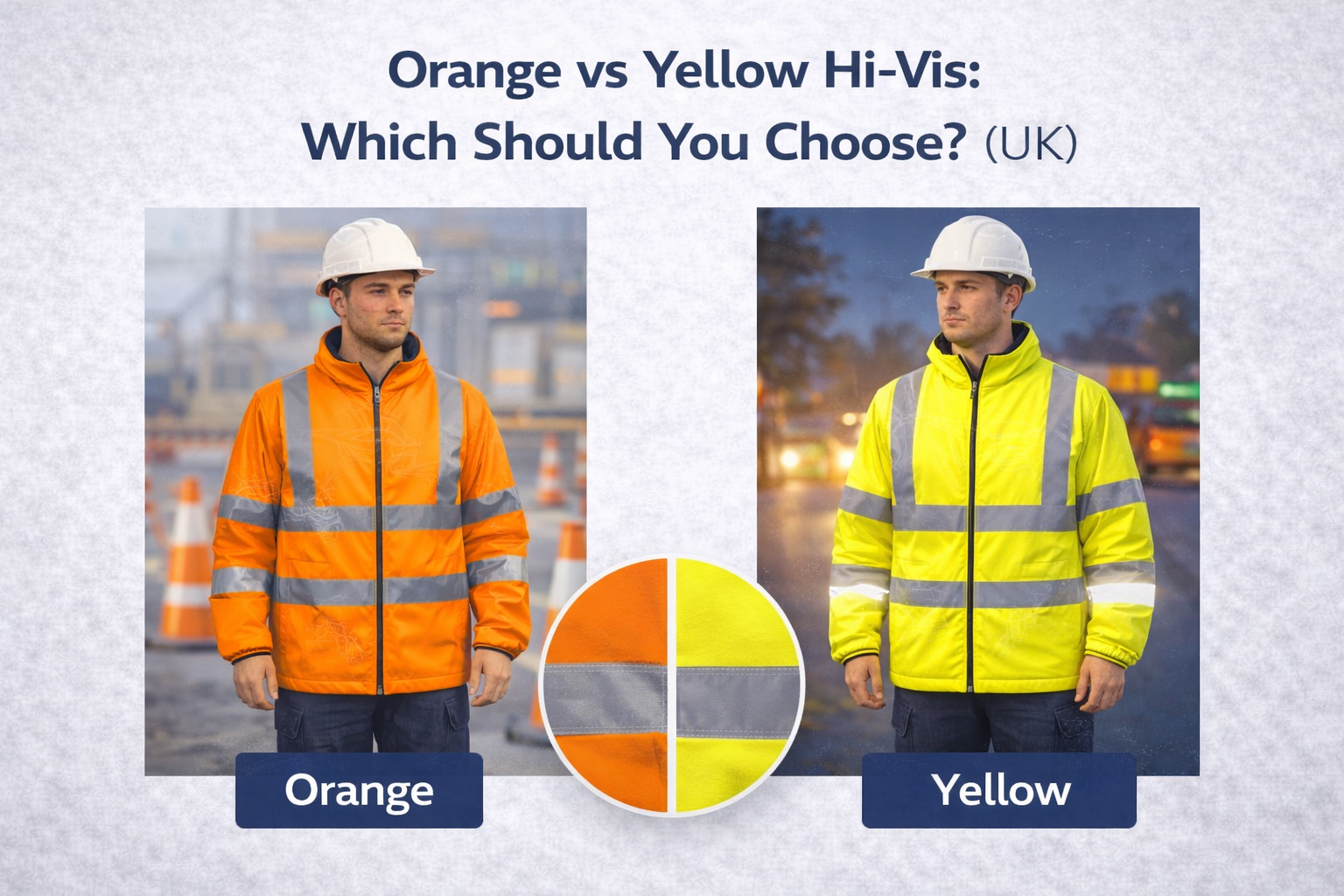
Orange vs Yellow Hi-Vis: Which Should You Choose?
Both orange and yellow hi-vis clothing can be compliant under EN ISO 20471, but the correct colour depends on the working environment, any industry-specific rules, and the requirements of the site or contract.
For many general workplaces, either colour may be suitable. In rail and some roadside environments, however, orange is often required or expected.
This guide explains:
- The difference between orange and yellow hi-vis
- When yellow hi-vis is commonly used
- When orange hi-vis is commonly required
- How EN ISO 20471 affects colour choice
- How rail and roadside work change the answer
This article is written for Health & Safety managers, buyers, procurement teams, contractors and employers choosing compliant hi-vis clothing for site or infrastructure work.
👉 Browse compliant options including hi vis vests, hi vis jackets, rail specification hi vis and traffic management hi vis workwear, or view the full hi vis workwear range.
Is orange hi-vis better than yellow?
No. Both orange and yellow hi-vis garments can provide excellent visibility when they are compliant, suitable for the task and selected using a proper risk assessment.
The better colour is the one that matches the working environment, any sector-specific rules and the site or contract requirements.
In many cases, this is a practical decision rather than a question of one colour being universally safer than the other. For general site work, employers may choose from a broad range of hi vis vests, hi vis jackets and other compliant garments in the colour most appropriate for the job.
When is yellow hi-vis usually used?
Yellow hi-vis is widely used across UK workplaces and is common on general construction sites, in warehousing, logistics, utilities, maintenance and contractor work.
Typical uses for yellow hi-vis include:
- Construction and civils
- Warehousing and logistics
- Utilities and maintenance work
- General contractor uniforms
- Day-to-day site operations where there is no specific colour requirement
Yellow is often chosen because it is familiar, widely available and easy to standardise across jackets, polos and t-shirts, vests, trousers and coveralls.
When is orange hi-vis usually used?
Orange hi-vis is commonly associated with transport-related environments, especially rail and roadside work. In some sectors, orange is not just a preference — it may be specified by site rules, contracts or industry guidance.
Typical uses for orange hi-vis include:
- Rail infrastructure and trackside work
- Roadworks and highways
- Traffic management
- Street works and public-facing maintenance
- Projects where the client or principal contractor specifies orange garments
If you work in rail or a specialist roadside environment, do not assume yellow will be accepted. In these settings, orange may be part of the required specification. This often means using dedicated rail spec hi vis vests, rail hi vis jackets and bodywarmers or contractor-specific hi vis traffic jackets.
What does EN ISO 20471 say about colour?
EN ISO 20471 is the main standard for high-visibility clothing used in hazardous working environments. It sets requirements for fluorescent background material, reflective tape, garment design and class designation.
It does not reduce the decision to a simple orange-is-better-than-yellow rule. Both colours can be compliant when the garment is correctly certified and suitable for the environment.
👉 Read the full standard guide: EN ISO 20471 Explained: Hi-Vis Classes, Requirements & Employer Responsibilities (UK)
How do rail and roadside environments affect colour choice?
This is where the answer becomes more specific. In rail environments, orange hi-vis is commonly required because of sector-specific rules and established visibility requirements. Similarly, many traffic management and roadside contractors standardise on orange because it is the recognised colour for that type of work.
For these environments, employers often need specialist categories rather than general hi-vis alone. Rail buyers may need rail specification hi vis workwear, while roadside contractors may require traffic management hi vis workwear and related traffic jackets.
Useful related links:
- When Is Hi-Vis Clothing Required at Work? (UK)
- Hi-Vis Classes Explained: Class 1, Class 2 & Class 3 (UK)
- Rail Hi-Vis Standard Explained: RIS-3279 vs EN ISO 20471
- Traffic Management Hi-Vis Requirements (UK Guide)
Does colour affect the hi-vis class?
No. The class of a hi-vis garment is determined by the amount of fluorescent material and reflective tape in the garment, not whether it is orange or yellow.
That means a yellow garment and an orange garment can both be Class 2, for example, if they meet the same EN ISO 20471 requirements. Employers still need to choose the right garment type, whether that is a hi vis vest, jacket, trouser or coverall, based on the environment and risk level.
👉 Related guide: Hi-Vis Classes Explained: Class 1, Class 2 & Class 3 (UK)
Choosing the right hi-vis clothing for orange and yellow environments
The right choice is not just about colour. It is also about the garment type, weather exposure, job role and whether the site requires standard or specialist hi-vis clothing.
- Hi vis vests – for general visibility across construction, logistics and site operations
- Hi vis vests with zips and pockets – for workers needing secure fastening and storage
- Hi vis jackets – for outdoor work and changing weather conditions
- Hi vis traffic jackets – for roadside environments and higher-risk visibility needs
- Rail specification hi vis workwear – for trackside and rail infrastructure roles
- Traffic management hi vis workwear – for highways and traffic control operations
Orange vs yellow hi-vis: practical comparison
- Yellow hi-vis is common in construction, logistics, warehousing, utilities and general site work
- Orange hi-vis is more likely to be specified in rail, highways and traffic management environments
- Both colours can be compliant under EN ISO 20471
- Neither colour automatically determines class
- The final choice should come from the risk assessment and any site or sector-specific rules
How should employers choose between orange and yellow?
The safest way to decide is to follow this order:
- Check the workplace risk assessment
- Confirm whether the site, client or industry specifies a colour
- Confirm the required hi-vis class and garment type
- Choose compliant garments suitable for the environment
- Standardise across teams if consistency matters for identification or branding
If rail or roadside requirements apply, those rules may decide the answer before you compare garment styles. In those cases, it often makes sense to move straight to rail specification hi vis or traffic management hi vis workwear rather than browsing only general categories.
What about branded orange and yellow hi-vis?
Both orange and yellow hi-vis garments can be branded, but logo placement must not interfere with reflective bands or reduce fluorescent coverage below the level required for compliance.
This is especially important on garments such as rail hi vis vests, traffic jackets and other outerwear where reflective layout is critical.
Useful related guides:
- Workwear Logo Placement Guide: Where Can Logos Be Added to Branded Workwear?
- Print vs Embroidery: Which Branding Method Is Right for Your Workwear?
- How to Order Branded Workwear for Your Business (Step-by-Step Guide)
Choosing the right hi-vis clothing
To choose the right colour and garment type:
- Base decisions on a formal risk assessment
- Confirm whether hi-vis is required
- Check whether the site or industry specifies orange or yellow
- Choose the correct class for the risk level
- Select garments suited to the weather, task and environment
- Check branding placement if garments will be personalised
👉 Browse compliant options: Hi Vis Vests | Hi Vis Jackets | Rail Specification Hi-Vis | Traffic Management Hi-Vis
FAQ: Orange vs yellow hi-vis
Is orange hi-vis more compliant than yellow?
No. Both colours can be compliant under EN ISO 20471. Compliance depends on certification, class and suitability for the environment, not simply the colour alone.
Why do rail workers usually wear orange hi-vis?
Rail environments often require orange garments because of sector-specific rules and visibility expectations.
Can construction workers wear either orange or yellow hi-vis?
Often yes, unless the site, client or principal contractor specifies a colour. Yellow is very common on construction sites, but orange may also be used depending on the project.
Does orange hi-vis mean Class 3?
No. Colour and class are separate. A garment’s class is based on visible material and reflective tape, not whether it is orange or yellow.
Where can I read more about hi-vis requirements?
Read our related guides: