
Originally published: 24 March 2026
Last reviewed for compliance: 24 March 2026
Respirators Explained: FFP1, FFP2 & FFP3 Masks – What’s the Difference?
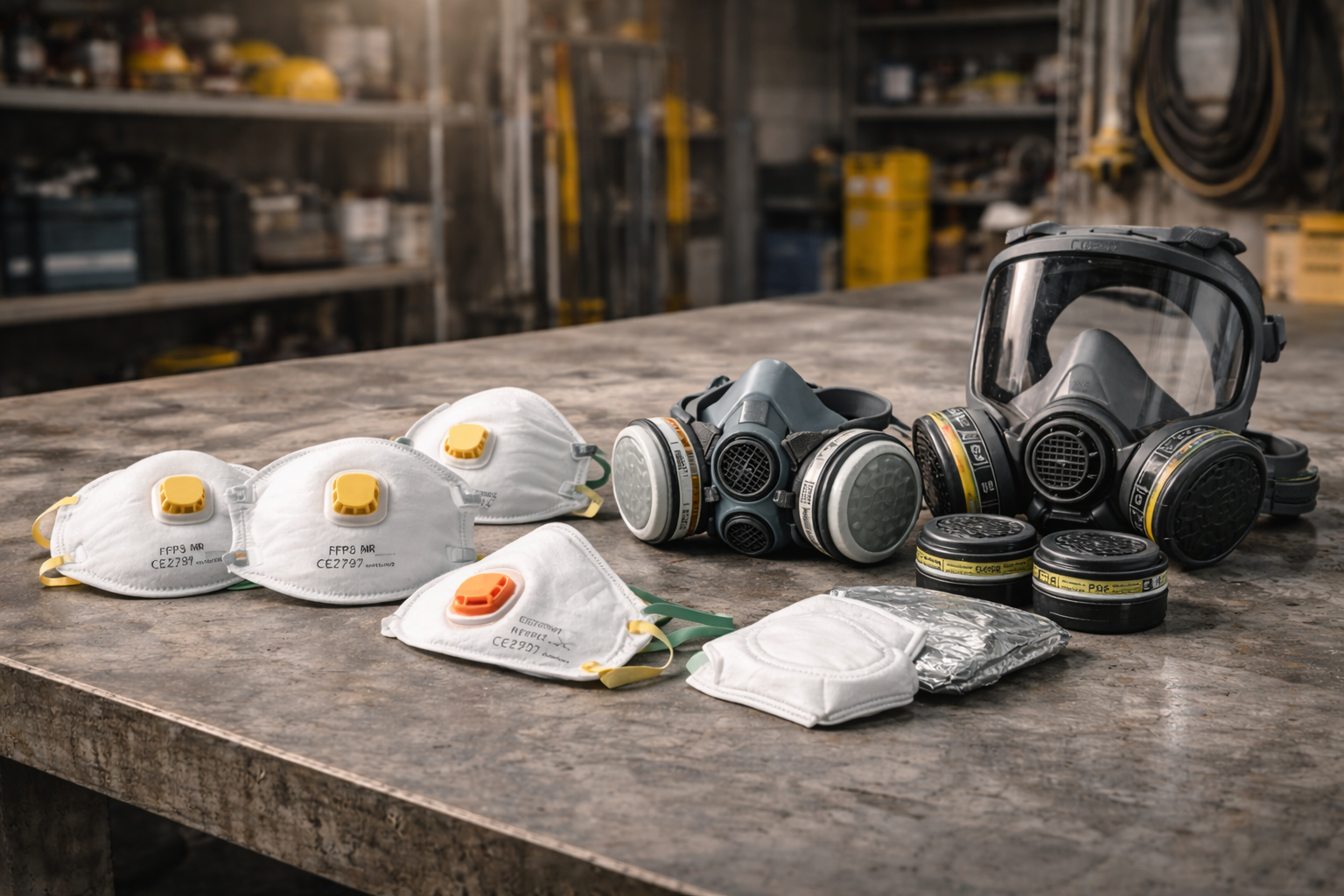
Respiratory protection is essential in many working environments where dust, fumes or airborne particles pose a risk to health. Construction sites, workshops, manufacturing facilities and maintenance environments often expose workers to substances that can be harmful when inhaled.
Not all respirators provide the same level of protection. Understanding the differences between FFP1, FFP2 and FFP3 masks is important for selecting the correct PPE and maintaining safe working conditions.
This guide explains how respirators work, the differences between FFP ratings and how to choose the right respiratory protection for your team.
👉 Browse respirators: Respirators
👉 Explore full PPE range: PPE
Why respiratory protection is important at work
Airborne hazards are common across many industries. Dust from cutting materials, fumes from chemicals and fine particles from industrial processes can all present risks to worker health.
Without suitable protection, workers may be exposed to:
- Respiratory irritation
- Long-term lung damage
- Exposure to hazardous airborne substances
- Reduced wellbeing and fitness for work
Employers are responsible for assessing these risks and providing suitable protection where required.
For a broader compliance overview, see what PPE is required by law in the UK workplace.
What do FFP ratings mean?
FFP stands for Filtering Face Piece. These ratings indicate the level of filtration a disposable respirator provides against airborne particles.
In the UK, disposable respirators are commonly classified into three protection levels:
- FFP1
- FFP2
- FFP3
Each level provides a different degree of filtration, so the correct mask depends on the level of airborne risk present.
FFP1 masks: basic protection
FFP1 masks provide the lowest level of filtration and are generally suitable for lower-risk dust environments.
Typical uses include:
- Light dust exposure
- Basic maintenance tasks
- Lower-risk non-hazardous work areas
They are not generally suitable where fine or more hazardous airborne particles are present.
👉 Browse: P1 Respirators
FFP2 masks: medium protection
FFP2 masks offer a higher level of filtration and are widely used across construction, trades and general industrial environments.
Common uses include:
- Construction work
- Working with wood, plaster or insulation materials
- General industrial and maintenance tasks
They are often used where a stronger level of protection is needed in moderate-risk environments.
👉 Browse: P2 Respirators
FFP3 masks: high protection
FFP3 masks provide the highest level of filtration among common disposable respirators.
Typical uses include:
- Working with fine airborne dust
- Higher-risk industrial environments
- Construction tasks involving more hazardous particles
- Environments where maximum disposable-mask filtration is required
They offer the highest level of disposable respirator protection for demanding environments.
👉 Browse: P3 Respirators
FFP1 vs FFP2 vs FFP3: what is the difference?
The main difference between FFP1, FFP2 and FFP3 masks is the level of filtration they provide.
- FFP1 – lower-level filtration for lighter dust exposure
- FFP2 – mid-level filtration for more demanding trade and industrial use
- FFP3 – highest filtration level for more hazardous airborne particles
The higher the FFP rating, the greater the level of particle filtration. The correct choice should always depend on the actual exposure risk.
Choosing the right respirator for the job
Selecting the correct respirator depends on the working environment, the substance being handled and the level of airborne exposure.
Businesses should consider:
- Type of airborne hazard
- Level of exposure
- Duration of use
- Comfort and fit
- Compatibility with other PPE
Providing the correct level of protection is essential if respiratory PPE is to be effective.
Respirators for different industries
The right respirator depends on the task and environment.
Construction
Construction workers often require respiratory protection during cutting, drilling, sanding and demolition tasks where dust exposure is common.
👉 Related guide: Construction PPE Guide
Workshops and engineering
Respirators may be required where workers are exposed to fine dust, particles or process-generated airborne contaminants.
Maintenance and facilities work
Respiratory protection may be needed for repair, cleaning or inspection tasks where airborne exposure varies by task.
Manufacturing and industrial environments
These environments may require stronger respiratory protection where airborne substances are generated regularly.
Respirators as part of a full PPE system
Respiratory protection is typically used alongside other PPE to provide broader protection.
It is commonly worn with eye protection and work gloves in environments where airborne hazards are present.
On construction sites, workers may also require safety helmets and hearing protection depending on the task.
Fit and comfort considerations
For respirators to be effective, they must fit properly. A poor seal can allow airborne particles to pass around the mask rather than through the filter material.
Key considerations include:
- Secure fit around the nose and mouth
- Adjustable straps where appropriate
- Comfort for the intended wearing time
- Compatibility with other PPE being worn at the same time
Workers should be trained to wear respirators correctly and to recognise when a mask is no longer fitting properly.
When should respirators be replaced?
Respirators should be replaced regularly to ensure continued protection and hygiene.
Replace masks if:
- They become damaged or misshapen
- They no longer fit correctly
- Breathing through them becomes difficult
- They have been worn for their intended use period
- They become contaminated or unsuitable for continued use
Disposable respirators should not be reused beyond their intended lifespan.
Managing respirators across teams
For businesses supplying PPE across teams and sites, maintaining consistent respirator availability is essential.
Best practices include:
- Providing the correct mask type for each task
- Ensuring correct fit and training
- Maintaining stock for replacements
- Reviewing mask type if job roles or exposure risks change
Many businesses include respirators within PPE kits to simplify supply and improve consistency.
Choosing the right respirators for your team
Providing appropriate respiratory protection is essential for maintaining safe working environments where airborne hazards are present.
By understanding the difference between FFP1, FFP2 and FFP3 masks, businesses can choose the most suitable respirators for their teams and help reduce exposure risk.
👉 Browse respirators: Respirators | P1 Respirators | P2 Respirators | P3 Respirators
Related PPE guides
- What PPE Is Required by Law in the UK Workplace?
- Construction PPE Guide
- Safety Helmets Guide
- Work Gloves Guide
- Eye Protection Guide
FAQ: Respirators and FFP masks
What is the difference between FFP1, FFP2 and FFP3 masks?
The difference is the level of filtration. FFP1 provides the lowest filtration, FFP2 provides a higher level, and FFP3 provides the highest level among common disposable respirators.
Which respirator is best for construction work?
That depends on the dust level and type of airborne hazard. Many construction tasks use FFP2 or FFP3 masks depending on the exposure risk.
What does FFP mean on a mask?
FFP stands for Filtering Face Piece. It refers to the mask’s classification for filtering airborne particles.
When should disposable respirators be replaced?
They should be replaced when damaged, contaminated, hard to breathe through, poorly fitting or when they have reached the end of their intended use period.
Supporting safe working environments
Respirators play a vital role in protecting workers from airborne hazards. By selecting the correct mask type and ensuring consistent use, businesses can reduce risk and support safer working environments across a wide range of industries.
👉 Explore all PPE categories: PPE