
Originally published: 24 March 2026
Last reviewed for compliance: 24 March 2026
Safety Helmets Explained: Types, Standards & When to Replace (UK Guide)
Safety helmets are a core part of personal protective equipment (PPE) across construction, utilities, logistics and industrial environments. Designed to protect workers from head injuries caused by falling objects, impacts and site hazards, they are essential on many UK worksites.
However, choosing the right helmet — and knowing when it should be replaced — is just as important as wearing one. This guide explains the main types of safety helmets, the standards they must meet and how businesses can manage helmet use across teams.
👉 Browse helmets: Safety Helmets
👉 Explore full PPE range: PPE
Why safety helmets are essential on site
Head injuries can happen quickly in active working environments, particularly on construction sites where tools, materials and equipment may be used overhead or in confined areas.
Common risks include:
- Falling objects
- Impact with structures or equipment
- Accidental knocks in restricted spaces
Safety helmets are designed to absorb and distribute impact forces, helping reduce the risk of serious injury.
For a wider overview of PPE requirements, see what PPE is required by law in the UK workplace.
What safety helmets are used for
Safety helmets are used wherever there is a risk of impact to the head. On many construction and industrial sites, they are part of the standard PPE issue because head injury risks can arise from multiple activities during the same shift.
Typical uses include:
- Construction and civils work
- Utilities and infrastructure projects
- Warehousing and logistics operations
- Maintenance and inspection work
- Engineering and industrial environments
Where site conditions require it, helmets are often issued alongside other PPE such as eye protection, hearing protection and hi vis workwear.
Types of safety helmets
Different working environments call for different helmet designs. Choosing the right type helps improve both protection and comfort.
Standard safety helmets
These are the most common helmets used on construction sites. They are designed to protect against falling objects and general impact risks.
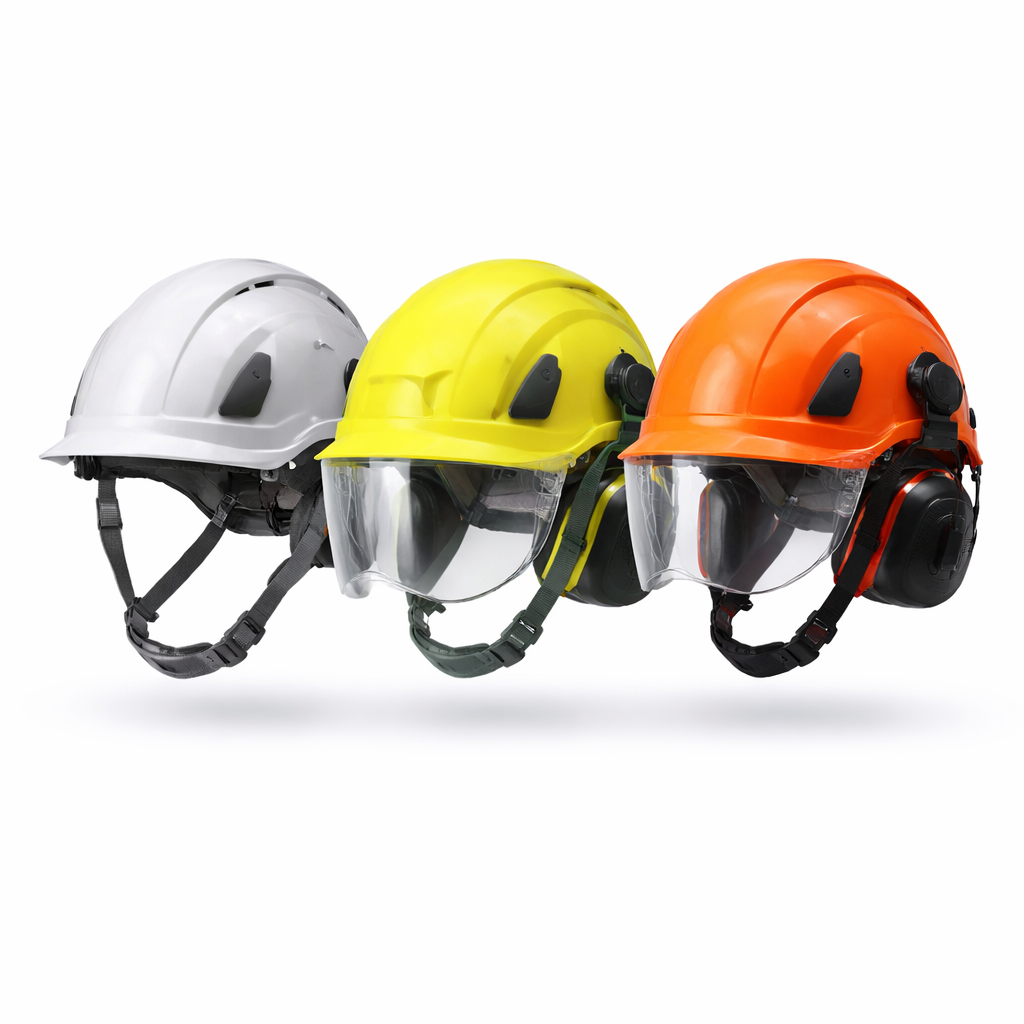
👉 Browse by colour: White | Yellow | Blue | Orange
Vented helmets
Vented helmets improve airflow and wearer comfort, particularly in warmer conditions. They are commonly used where breathability matters, but they are not suitable for every working environment.
Non-vented helmets
Non-vented helmets are used where additional protection is needed in environments that may involve electrical hazards or where vent openings are not appropriate.
Peak and short-peak helmets
Helmet designs vary depending on visibility requirements and working conditions. Short-peak options are often used where upward visibility is important.
👉 Specialist options: Short Peak Helmets | Safety Bump Caps
Helmet colours and role identification
On many UK sites, helmet colour is used to help identify roles, departments or visitor status. However, colour coding varies between employers and contractors, so there is no single universal system for every workplace.
Many businesses standardise colours across their teams to improve identification and site organisation.
Common options include:
- White safety helmets
- Yellow safety helmets
- Blue safety helmets
- Orange safety helmets
- Green safety helmets
- Red safety helmets
Understanding UK helmet standards
In the UK, safety helmets must meet recognised standards to ensure they provide appropriate protection.
The most common standard is:
- EN 397 – Industrial safety helmets
This standard covers areas such as impact resistance, penetration resistance and overall performance.
Always make sure the helmet is suitable for the working environment and task, rather than choosing on appearance or colour alone.
Helmet compatibility with other PPE
Safety helmets are rarely used in isolation. On most sites, they form part of a wider PPE system.
Helmets are commonly worn alongside eye protection and hearing protection to provide broader protection on site.
Many helmets are also compatible with accessories such as visors and ear defenders.
👉 Browse accessories: Helmet Accessories
Can safety helmets be branded?
Yes. Many businesses choose to brand safety helmets as part of their wider site presentation, contractor identification or uniform strategy.
At Hi Vis Workwear, we offer UV DTF helmet branding, which provides a durable, high-quality finish suitable for industrial environments.
Key benefits include:
- High-detail logo reproduction
- Strong adhesion for site use
- Clean application on curved surfaces
- No setup fees with artwork stored for repeat orders
👉 Learn more: Branded PPE Guide
👉 Branding services: Branding & Printing
When should safety helmets be replaced?
Safety helmets should be replaced when they no longer provide reliable protection. Even where there is no obvious visible damage, helmets can degrade over time through wear, storage conditions and general site use.
Replace helmets if:
- They have been subjected to impact
- There are cracks, dents or visible damage
- The internal harness is worn or damaged
- The helmet has been exposed to harsh conditions over time
- The manufacturer’s guidance indicates replacement is due
Regular inspection is essential to ensure helmets remain safe to use.
How to inspect and maintain safety helmets
Proper maintenance helps extend helmet life and ensures helmets remain effective while in use.
Best practices include:
- Cleaning with mild soap and water
- Storing away from excessive heat and direct sunlight
- Inspecting shells and harnesses regularly
- Replacing damaged or worn components where appropriate
- Removing damaged helmets from use immediately
Any helmet showing signs of deterioration should be taken out of service and replaced.
Managing helmets across teams
For businesses supplying PPE across multiple workers or sites, consistency is important. Standardising helmet types, colours and replacement routines helps improve site control and simplify reordering.
Many organisations include helmets as part of structured supply systems such as PPE kits for construction teams, ensuring workers receive the correct equipment from day one.
This approach helps maintain safety standards and makes replacement planning easier.
Choosing safety helmets for your team
Providing the right safety helmets is essential for protecting workers and maintaining safe site practices.
By selecting compliant products, ensuring correct fit and replacing helmets when needed, businesses can reduce risk and improve safety outcomes across their teams.
👉 Browse helmets: Safety Helmets
Related PPE guides
- What PPE Is Required by Law in the UK Workplace?
- Construction PPE Guide
- Work Gloves Guide
- Eye Protection Guide
- Branded PPE
FAQ: Safety helmets
What standard should a safety helmet meet in the UK?
The most common standard for industrial safety helmets in the UK is EN 397.
When should a safety helmet be replaced?
Helmets should be replaced after impact, when damaged, when the internal harness is worn, or when manufacturer guidance indicates replacement is due.
Can safety helmets be branded?
Yes. Safety helmets can be branded provided the method used is suitable for the helmet and does not affect safe use.
Are vented helmets the same as non-vented helmets?
No. Vented helmets improve airflow, while non-vented helmets are used where additional protection is needed in environments such as those involving electrical hazards.
Maintaining safe head protection standards
Safety helmets remain one of the most important items of PPE on any worksite. By understanding the different types available, ensuring compliance with UK standards and maintaining helmets correctly, businesses can provide effective head protection for their teams.
👉 Explore full PPE range: PPE