
Originally published: 24 March 2026
Last reviewed for compliance: 24 March 2026
Hearing Protection at Work: Ear Defenders vs Ear Plugs Explained
Hearing damage is one of the most common long-term health risks in construction, manufacturing and industrial environments. Prolonged exposure to high noise levels can lead to permanent hearing loss, often without immediate warning signs.
Providing the correct hearing protection is essential for protecting workers and maintaining compliance with UK workplace safety requirements. However, many businesses are unsure whether ear defenders or ear plugs are the most suitable option.
This guide explains the differences between ear defenders and ear plugs, when each should be used and how to choose the right hearing protection at work for your team.
👉 Browse hearing protection: Hearing Protection
👉 Explore full PPE range: PPE
Why hearing protection is important at work
High noise levels are common across many workplaces, particularly where machinery, tools, vehicles or repetitive industrial processes are in use. Without suitable protection, repeated exposure can lead to permanent hearing damage over time.
Common sources of workplace noise include:
- Power tools and cutting equipment
- Heavy machinery and plant
- Manufacturing processes
- Transport and logistics operations
- Workshop and engineering equipment
Employers are responsible for assessing noise risks and providing suitable protection where required.
For a broader compliance overview, see what PPE is required by law in the UK workplace.
What are ear defenders?
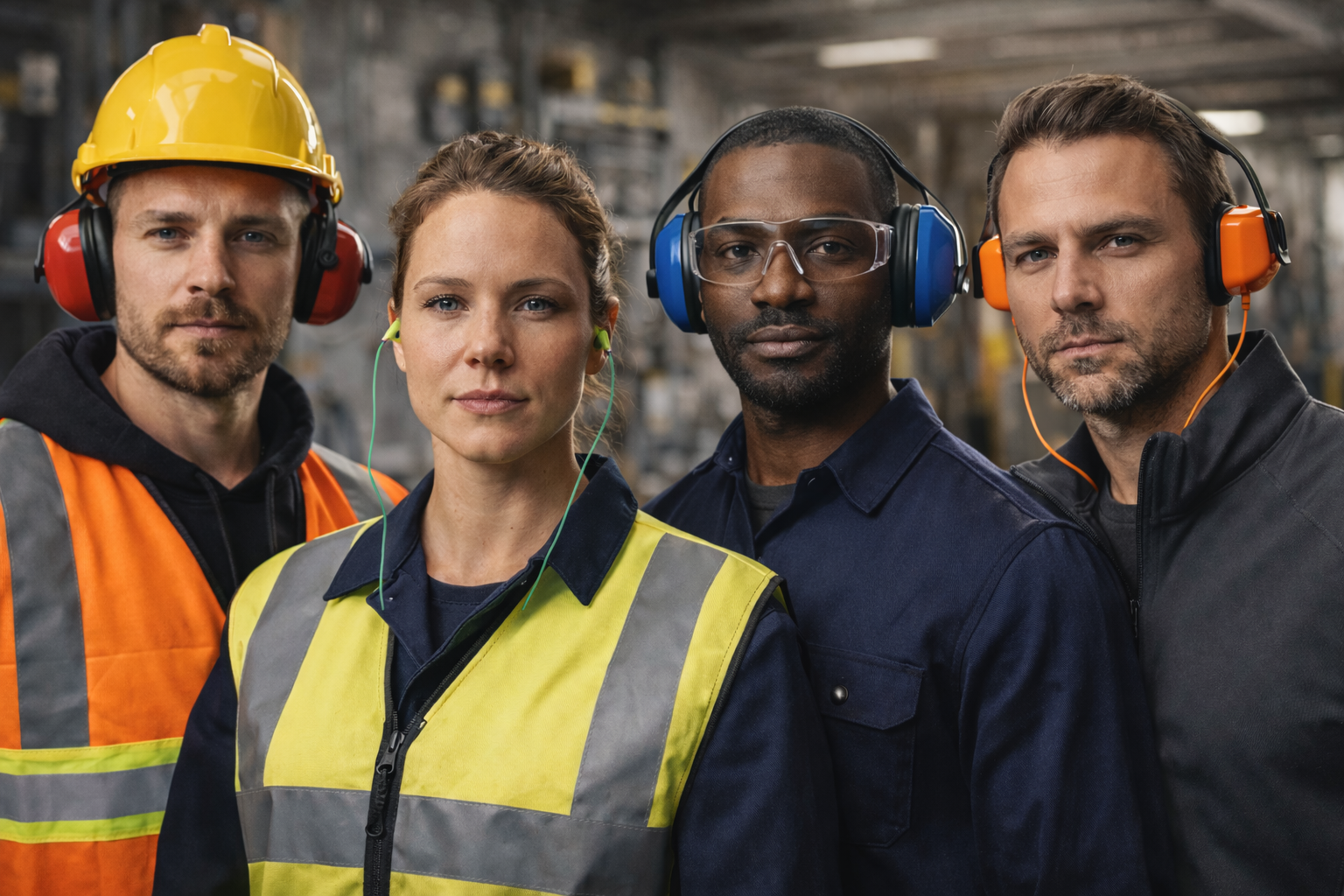
Ear defenders are a type of hearing protection that covers the ear using cushioned cups connected by a headband. They reduce noise exposure by creating a seal around the ear.
Key features include:
- High noise reduction levels
- Reusable and durable construction
- Easy to put on and remove
- Often compatible with safety helmets and other site PPE
- Easy for supervisors to check visually on site
Ear defenders are commonly used in high-noise environments where consistent protection is needed.
👉 Browse ear defenders: Ear Defenders
What are ear plugs?
Ear plugs are inserted into the ear canal to reduce noise exposure. They are usually made from foam, silicone or other soft materials and are available in disposable and reusable formats.
Key features include:
- Lightweight and compact design
- Suitable for prolonged wear
- Disposable or reusable options
- Comfortable when worn with other PPE
- Practical where bulk supply is needed
Ear plugs are often preferred where workers need to wear multiple items of PPE at the same time or where lighter protection is more practical.
👉 Browse ear plugs: Ear Plugs
Ear defenders vs ear plugs: what is the difference?
Both forms of hearing protection are effective, but they suit different environments, tasks and wearer preferences.
- Ear defenders provide strong, consistent protection and are easy to supervise
- Ear plugs are more compact and may be more comfortable for long wear
- Defenders are often preferred in high-noise construction and industrial settings
- Plugs are useful where workers also need helmets, eye protection or respirators
The right choice depends on the level of noise, the duration of exposure and the wider PPE setup.
When should ear defenders be used?
Ear defenders are often the better option where noise levels are consistently high or where easy on-off protection is important.
They are commonly used for:
- Construction and civils work
- Heavy machinery use
- Workshop tasks with loud intermittent noise
- Environments where visible enforcement matters
Because they are easy to fit and remove, ear defenders are often a practical choice for workers moving between noisy and quieter areas.
When should ear plugs be used?
Ear plugs are often a good option where workers need compact, lower-profile hearing protection that fits comfortably with other PPE.
They are commonly used for:
- Longer-duration wear
- Warehousing and logistics environments
- Manufacturing roles where comfort matters
- Situations where helmets, goggles or respirators are also worn
Disposable ear plugs are also useful where hygiene and single-use issue are important.
Choosing hearing protection for different industries
The most suitable hearing protection depends on the working environment, noise exposure and the wider PPE requirements of the role.
Construction
High noise levels from tools, breakers and machinery often make ear defenders a practical choice, particularly where they are worn with helmets.
👉 Related range: Construction Workwear
Manufacturing and engineering
Continuous noise exposure may require either ear defenders or ear plugs depending on comfort, duration and compatibility with other PPE.
Logistics and warehousing
Noise levels vary by site and task, so ear plugs may be preferred where flexibility and comfort are priorities.
Maintenance and workshops
Short bursts of loud noise may suit easily removable hearing protection such as ear defenders.
Hearing protection as part of a full PPE system
Hearing protection is usually used alongside other PPE rather than on its own.
It is commonly worn with safety helmets and eye protection on construction and industrial sites.
Workers may also require work gloves and respiratory protection depending on the task. For wider site guidance, see our construction PPE guide.
What is SNR in hearing protection?
Hearing protection products are often rated using SNR, or Single Number Rating. This indicates how much noise reduction the product is designed to provide.
Higher SNR values mean greater potential noise reduction, but products should still be selected based on the actual workplace noise level and working conditions.
It is important to choose hearing protection that reduces harmful noise without preventing workers from remaining aware of their surroundings where necessary.
When should hearing protection be replaced?
Hearing protection should be checked regularly to make sure it remains effective and comfortable.
Replace equipment if:
- Ear defender cushions are worn, split or damaged
- Headbands are loose or no longer seal properly
- Ear plugs lose shape, hygiene or fit
- Reusable protection shows visible wear or contamination
Disposable ear plugs should be replaced regularly, while reusable equipment should be cleaned and maintained correctly.
Managing hearing protection across teams
For businesses supplying PPE across teams, consistent hearing protection issue is important for both safety and compliance.
Best practices include:
- Providing suitable protection for each role
- Ensuring correct fit and comfort
- Keeping replacement stock available
- Training workers on correct use and storage
- Reviewing protection when tasks or environments change
Many businesses include hearing protection within PPE kits to simplify supply and reordering.
Choosing the right hearing protection for your team
Providing suitable hearing protection is essential for protecting workers in noisy environments.
By understanding the difference between ear defenders and ear plugs, businesses can choose the most suitable PPE for their teams and help reduce long-term hearing risk.
👉 Browse hearing protection: Hearing Protection
Related PPE guides
- What PPE Is Required by Law in the UK Workplace?
- Construction PPE Guide
- Safety Helmets Guide
- Work Gloves Guide
- Respirators Guide
FAQ: Hearing protection at work
What is the difference between ear defenders and ear plugs?
Ear defenders cover the outside of the ear with cushioned cups, while ear plugs fit inside the ear canal. Both reduce noise, but they suit different environments and preferences.
Which is better, ear defenders or ear plugs?
Neither is always better. Ear defenders are often easier to supervise and use in high-noise settings, while ear plugs can be more comfortable with other PPE and for long periods of wear.
What does SNR mean on hearing protection?
SNR stands for Single Number Rating. It indicates the level of noise reduction the hearing protection is designed to provide.
When should hearing protection be replaced?
Replace hearing protection when it is worn, damaged, unhygienic or no longer provides a proper fit or seal.
Protecting hearing in the workplace
Hearing protection plays a critical role in reducing long-term health risks in noisy environments. By selecting suitable products and ensuring consistent use, businesses can help protect workers and maintain safer working conditions.
👉 Explore all PPE categories: PPE