
Originally published: 9 March 2026
Last reviewed for compliance: 9 March 2026
How Long Does Hi-Vis Clothing Stay Compliant? (UK Guide)
Hi-vis clothing does not stay compliant forever. Even when a garment is certified to EN ISO 20471, its performance can reduce over time due to wear, washing, fading, damaged reflective tape and general site use.
This guide explains:
- How long hi-vis clothing typically stays compliant
- What causes hi-vis garments to lose compliance
- When hi-vis clothing should be replaced
- How employers should inspect and manage hi-vis PPE
- How washing, wear and branding affect performance
This article is written for Health & Safety managers, site supervisors, procurement teams and employers responsible for maintaining compliant hi-vis PPE.
👉 Browse compliant options including hi vis vests, hi vis jackets, hi vis trousers and hi vis coveralls, or view the full hi vis workwear range.
How long does hi-vis clothing stay compliant?
Hi-vis clothing remains compliant only while it continues to meet the visibility requirements it was certified to achieve.
There is no fixed lifespan. Instead, compliance depends on:
- Frequency of use
- Washing cycles
- Working environment
- Condition of fabric and reflective tape
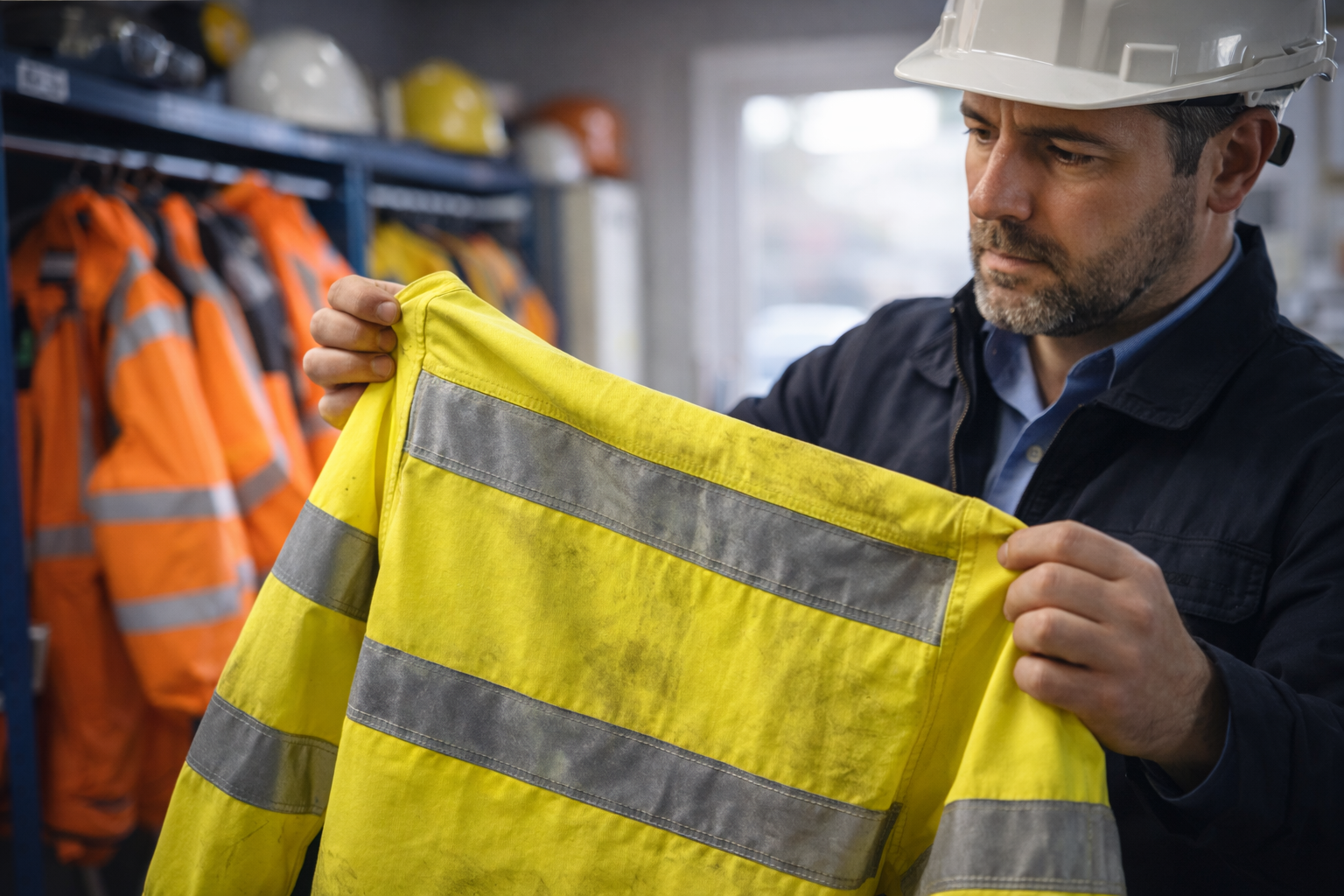
Key rule: Replace hi-vis clothing as soon as it becomes faded, damaged, contaminated or less visible.
Compliance is based on condition — not age.
👉 Related: EN ISO 20471 Explained
Why hi-vis clothing loses compliance over time
Hi-vis garments rely on two key elements:
- Fluorescent fabric for daytime visibility
- Reflective tape for low-light visibility
Both degrade over time due to:
- Repeated washing
- UV exposure
- Dirt, grease, paint or chemicals
- Abrasion from site work
- Tears and seam damage
- Cracked or peeling reflective tape
Even if a garment appears usable, reduced reflectivity or faded fabric can compromise safety. This affects everyday hi vis vests, outdoor hi vis jackets, heavier-duty hi vis trousers and all-in-one hi vis coveralls alike.
Signs hi-vis clothing should be replaced
Replace hi-vis garments if you notice:
- Faded or dull fluorescent colour
- Damaged or missing reflective tape
- Tears, holes or poor fit
- Permanent staining or contamination
- Reduced visibility in real working conditions
- Branding or alterations affecting visible area
High-risk environments such as roads, rail and construction require stricter replacement standards. In those settings, employers may need to replace traffic management hi vis clothing or rail specification hi vis workwear more aggressively where visibility standards are critical.
Does washing affect hi-vis compliance?
Yes — washing is one of the main factors affecting lifespan.
Over time, washing can:
- Fade fluorescent fabric
- Damage reflective tape
- Weaken seams and stitching
- Reduce waterproof performance
Always follow manufacturer instructions for washing and drying.
If visibility has clearly reduced after repeated washing, the garment should be replaced. This is especially important for outerwear such as hi vis jackets, hi vis traffic jackets and specialist garments used daily in demanding conditions.
Do wash cycle limits matter?
Some garments are tested to a specific number of wash cycles. This indicates expected performance — not a strict expiry point.
Important: A garment can become non-compliant before or after its stated wash limit depending on usage and care.
Condition should always take priority over wash count.
How often should hi-vis clothing be inspected?
Hi-vis PPE should be checked regularly, especially in higher-risk environments.
- Before use – by the wearer
- Routine checks – by supervisors
- Formal review – for issued PPE systems
More hazardous environments require stricter inspection routines. Employers issuing rail spec hi vis vests, rail hi vis jackets or roadside garments should usually apply tighter checks than for occasional visitor clothing.
👉 Related: When Is Hi-Vis Required?
Does hi-vis class affect replacement frequency?
Yes — higher-risk environments require stricter standards.
- Class 1 – lower-risk or visitor use
- Class 2 – regular site and logistics use
- Class 3 – high-risk environments (roads, rail)
The higher the risk, the lower the tolerance for wear or damage. Employers using garments for roadside or rail work may need to review traffic management hi vis, rail specification hi vis and other high-risk PPE more frequently than general sitewear.
👉 Related: Hi-Vis Classes Explained
How long do hi-vis garments last in practice?
Lifespan varies depending on usage:
- Daily sitewear → shorter lifespan
- Outerwear → moderate lifespan
- Visitor garments → longer lifespan if stored well
A garment’s age is not a reliable indicator — condition is what matters. For example, frequently worn hi vis vests with zips and pockets used daily on site may degrade faster than occasional-use visitor garments kept clean and stored correctly.
How contamination affects compliance
Dirt and contamination can significantly reduce visibility.
- Cement or dust covering fabric
- Oil or grease dulling reflectivity
- Paint covering visible areas
- Mud reducing contrast
If contamination cannot be removed, the garment should be replaced. This is particularly important for hi vis coveralls, trousers and other garments exposed to heavy site dirt or industrial contaminants.
Can branding affect compliance?
Yes — poorly applied branding can reduce visible surface area or affect garment performance.
Key risks include:
- Logos covering reflective tape
- Reduced fluorescent surface area
- Wear caused by printing methods
This matters across hi vis vests, jackets, polos and t-shirts and specialist outerwear where reflective placement is critical.
👉 Related:
How employers should manage hi-vis PPE
Hi-vis should be managed like any other critical PPE.
- Issue correct garments for the environment
- Train workers to identify damage
- Carry out regular inspections
- Replace garments promptly
- Follow proper washing and storage practices
That may mean issuing different categories for different roles, such as hi vis jackets for outdoor teams, hi vis trousers for full-body visibility systems, or rail- and roadside-specific garments where sector rules apply.
How to extend the life of hi-vis clothing
- Follow washing instructions
- Avoid harsh chemicals
- Store garments clean and dry
- Replace damaged items early
- Use correct garments for the task
Choosing the right garment from the start can reduce premature wear. For example, waterproof and heavy-duty roles may be better served by dedicated hi vis outerwear or coveralls instead of lighter garments not suited to the environment.
Choosing replacement hi-vis clothing
When replacing garments, ensure they match the required environment:
- Correct visibility class
- Appropriate colour (orange vs yellow)
- Industry-specific requirements (rail, highways)
- Branding compatibility
Different roles may require different replacement options:
- Hi vis vests – for general site visibility and visitor use
- Hi vis jackets – for weather-exposed work and outerwear use
- Hi vis trousers – for full-body visibility systems
- Hi vis coveralls – for all-in-one compliance and site protection
- Rail specification hi vis workwear – for trackside and infrastructure roles
- Traffic management hi vis workwear – for roadside and highways work
👉 Related:
👉 Browse compliant replacement garments: Hi Vis Vests | Hi Vis Jackets | Hi Vis Trousers | Hi Vis Coveralls | Rail Spec Hi Vis | Traffic Management Hi Vis
Frequently asked questions
How long does hi-vis clothing stay compliant?
Only while it remains in good condition and meets visibility standards. There is no fixed lifespan.
When should hi-vis clothing be replaced?
When faded, damaged, contaminated or no longer clearly visible.
Does washing affect compliance?
Yes — repeated washing reduces brightness and reflective performance over time.
Can new hi-vis clothing still become non-compliant?
Yes — damage, contamination or poor maintenance can make even newer garments non-compliant.