
Originally published: 28 January 2026
Last reviewed for compliance: 28 January 2026
EN ISO 20471 Explained: Hi-Vis Classes, Requirements & Employer Responsibilities (UK)
High-visibility clothing is essential personal protective equipment (PPE) across industries where workers are exposed to moving vehicles, plant or low-visibility conditions, including construction, logistics, roadworks, rail, utilities and warehousing.
In the UK, the primary standard for hi-vis PPE is EN ISO 20471. This guide explains:
- What EN ISO 20471 is
- Who it applies to
- Employer responsibilities under UK regulations
- How compliant garments are assessed
- How to choose suitable hi-vis clothing for different environments
👉 Shop EN ISO 20471 compliant hi-vis workwear including hi vis vests, hi vis jackets, hi vis trousers and hi vis coveralls, or browse the full hi vis workwear range.
What is EN ISO 20471?
EN ISO 20471 is the international standard specifying requirements for high-visibility clothing designed to make the wearer clearly visible in hazardous environments.
- Fluorescent materials for daytime visibility
- Retroreflective tape for low-light and night visibility
- Garment design rules for visibility from multiple angles
- Certification and labelling requirements
In UK workplaces, hi-vis clothing identified through risk assessment should be suitable for the environment and typically compliant with EN ISO 20471.
Who must comply with EN ISO 20471?
This standard applies wherever workers must be visible to vehicles, plant or hazards.
- Exposure to moving vehicles or machinery
- Working in low light or poor weather
- Need for visibility at distance
Common sectors include construction, logistics, roadworks, rail and utilities.
Employer responsibilities (UK)
- Carry out a risk assessment
- Provide suitable PPE free of charge
- Maintain and replace garments
- Train staff on correct use
👉 Related: When Is Hi-Vis Required?
How hi-vis classes work under EN ISO 20471
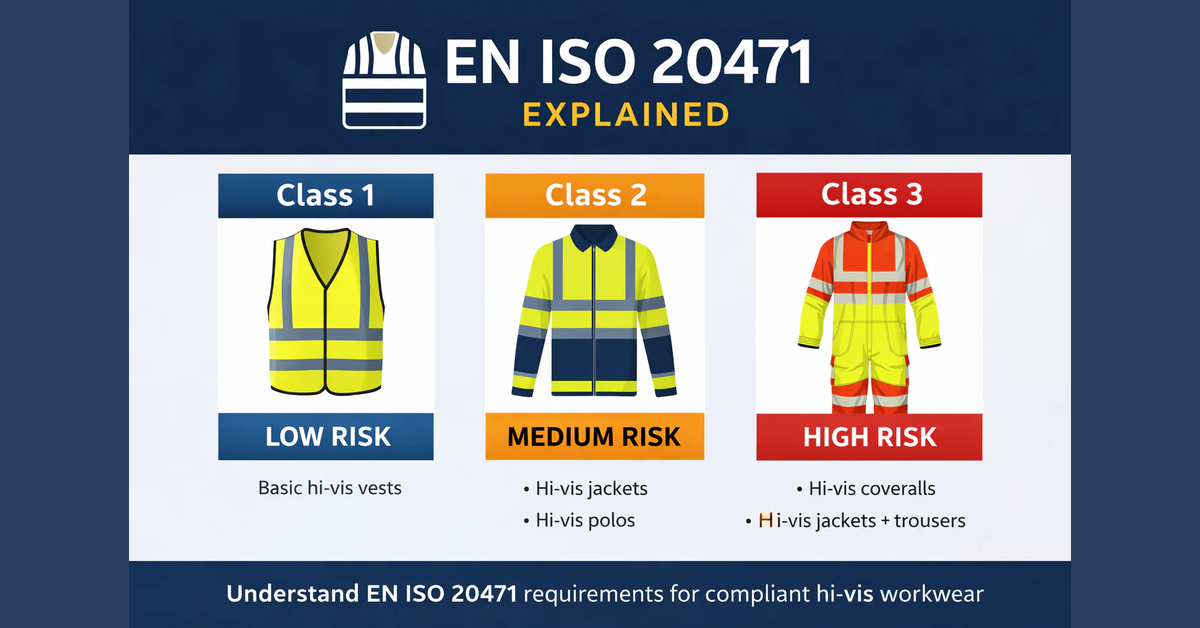
Garments are classified into three levels based on visible material and reflective coverage.
👉 Read full breakdown: Hi-Vis Classes Explained
- Class 1 – lowest visibility
- Class 2 – medium visibility
- Class 3 – highest visibility
Choosing the right hi-vis class for your work environment
The correct class depends on risk level, traffic speed and site conditions.
- Class 1 – controlled environments such as warehouses. Often includes basic hi vis vests.
- Class 2 – construction, logistics and utilities. Common garments include hi vis polos and zip vests.
- Class 3 – roadworks, night work and high-risk environments. Includes hi vis jackets, trousers and coveralls.
Always confirm through a formal risk assessment.
What makes a garment compliant?
Fluorescent material
Improves daytime visibility.
Reflective tape
Improves night visibility.
Garment design
Ensures visibility from multiple angles.
Certification
Garments must carry EN ISO 20471 labelling.
Choosing the right hi-vis clothing
Common compliance mistakes
- Using non-certified garments
- Choosing incorrect class
- Incorrect branding placement
- Failing to replace worn garments
👉 Related: Garment lifespan guide
Branding hi-vis clothing safely
Branding is possible but must not:
- Cover reflective tape
- Reduce fluorescent area
- Change garment class
👉 Related: Logo placement guide
Specialist environments
Traffic management
Rail
Shop EN ISO 20471 compliant hi-vis workwear
FAQ: EN ISO 20471
Is EN ISO 20471 a legal requirement?
No, but UK law requires suitable PPE, and this usually means using recognised standards like EN ISO 20471.
What class of hi-vis do I need?
This depends on risk level, environment and visibility requirements.
Can branded hi-vis remain compliant?
Yes, if logos do not interfere with reflective or fluorescent areas.
Final thoughts
EN ISO 20471 is the key standard for high-visibility clothing in the UK. Choosing the correct class, maintaining garments and applying branding correctly ensures both safety and compliance.
👉 Browse compliant hi-vis workwear: Hi Vis Range